
Can Mold Really Grow in Your Air Ducts? What Homeowners Need to Know About HVAC Mold
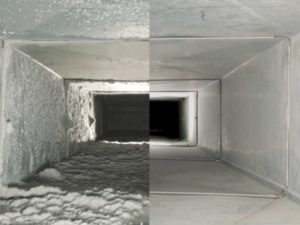 Most homeowners think of mold as a problem confined to basements, bathrooms, or crawl spaces. But an HVAC system creates conditions that can allow mold to grow directly inside air ducts, and because that system circulates air throughout the entire home, the consequences can spread far beyond where the mold actually started.
It might seem unlikely that mold could establish itself inside a metal or fiberglass duct system, but the conditions inside an HVAC system are often more favorable to mold growth than most homeowners realize. Understanding why it happens is the first step toward recognizing it early.
Why Mold Can Grow Inside HVAC Systems
Air conditioning systems naturally produce condensation as they cool warm, humid air. If that moisture is not properly drained or if ductwork develops leaks that allow humid outside air to enter, the inside of the duct system can stay damp enough to support mold growth, especially in the dark, enclosed environment ductwork provides.
Signs Mold May Be Growing in Your Ducts
Because these signs can also be caused by other issues, such as ordinary seasonal allergies or an unrelated musty smell from a nearby crawl space, it is easy to dismiss them individually. Considering them together, especially when they coincide with the HVAC system running, gives a much clearer picture of whether the ductwork itself deserves a closer look.
A Musty Smell When the System Turns On
One of the most common signs of HVAC mold is a musty odor that becomes noticeably stronger whenever the heating or cooling system starts running.
Visible Mold Near Vents or the Air Handler
Dark spots or discoloration around supply vents, the air handler, or the evaporator coil area can be a direct sign of mold growth within the system.
Worsening Allergy or Respiratory Symptoms Indoors
Since HVAC systems distribute air throughout the entire home, mold growing inside ductwork can contribute to allergy symptoms, coughing, or respiratory irritation that seems to affect multiple rooms rather than just one area.
Why HVAC Mold Should Not Be Ignored
Because an HVAC system actively pushes air through every connected room, mold growing inside the ductwork can affect indoor air quality throughout the entire house, not just in one isolated location like a basement or attic might.
How Professional Remediation Addresses HVAC Mold
Addressing mold in an HVAC system typically involves testing to confirm the presence and extent of the problem, thorough cleaning of the ductwork and related components, correcting any moisture source such as a drainage issue or duct leak, and verifying results with follow up testing.
Protecting Every Room the System Reaches
Unlike mold confined to a single bathroom or basement corner, mold inside an HVAC system has the ability to reach nearly every room in the house every time the system cycles on. That reach is exactly why HVAC related mold deserves prompt attention rather than a wait and see approach, since the same air moving through a contaminated duct system is the air your entire household is breathing on a daily basis.
HVAC Mold Remediation Experts
Pollution Solutions provides air duct cleaning and remediation alongside mold removal and remediation and mold testing services for homeowners dealing with suspected HVAC mold. We also specialize in air quality testing, water damage and drainage correction, basement and crawl space encapsulation and vapor barrier installation, crawl space foundation and structural repairs, and insulation removal and installation.
Our team is licensed and insured, and every job we complete comes with a warranty. With offices in Philadelphia and New Jersey, we are able to respond quickly to homeowners throughout the region who suspect mold in their HVAC system.
Find Out What Your HVAC System Is Circulating
If you suspect mold in your air ducts, professional testing can confirm it and guide the right next steps. We offer free estimates.